Blackheads on the nose come from oxidized sebum sitting inside a widened pore, not from dirt sitting on top of your skin — which is why scrubbing it raw rarely clears anything and usually leaves the area redder than before you started. This guide breaks down the routine that actually reduces how clogged those pores look: what to use, in what order, and how long to wait before judging it.
- How to fix blackheads on nose men actually works comes down to BHA exfoliation, not friction from a scrub.
- Sebum turns dark when it oxidizes on contact with air inside the pore — that's the blackhead, not trapped dirt.
- A non-comedogenic, oil-free zinc gel controls the shine that refills pores again by midday.
- Give the routine 4 to 6 weeks before judging it — blackheads that took months to form don't clear in a week.
Why this matters
The nose carries a higher density of sebaceous glands than almost any other spot on the face. More oil glands means more sebum, and sebum sitting exposed at the surface oxidizes and turns dark — that's the blackhead, not trapped dirt. In 2026, most drugstore advice on blackheads still opens with a scrub, and that's outdated guidance for the nose specifically: a gritty scrub tears at the pore lining instead of clearing the plug inside it, which is why the same blackhead often reappears within a day or two, now sitting next to inflamed skin.
Salicylic acid works differently because it's oil-soluble. It travels into the pore itself and breaks down the mix of dead skin cells and sebum forming the plug, instead of sanding the surface. OLIRS's Clarifying Gel is built around that idea — read the label before buying anything marketed for blackheads, and confirm salicylic acid or a similar BHA is actually on the ingredient list. If it isn't named, it's not doing this specific job, no matter what the front of the bottle says.
This won't erase enlarged pores permanently. Pore size is mostly structural, tied to gland activity and skin elasticity, and no over-the-counter product changes that. What a consistent routine does is reduce how clogged and dark those pores look over several weeks. That's the honest ceiling here, and it's worth stating before you spend money expecting more.
What you'll need
- A gentle, low-foam cleanser you can use twice daily without your skin feeling tight afterward
- A salicylic acid (BHA) product at 0.5-2%, applied 3-4 nights a week to start
- An AHA exfoliant (glycolic or lactic acid) for two nights a week, never stacked with BHA the same night
- An oil-free, non-comedogenic moisturizer — yes, even for oily skin
- 4 to 6 weeks before you judge whether any of it worked
- Nothing sharp, nothing metal, and no fingers on the blackhead itself
The steps
1. Wash with a gentle cleanser, not a scrub
A cleanser's job is to lift surface oil and buildup without stripping the skin barrier underneath it. Use lukewarm water, not hot — heat pulls more oil out of skin than needed and triggers rebound oil production within hours. Wash twice a day for about 30 seconds each time, then pat dry instead of rubbing.
Common mistake: washing more than twice a day because the nose still looks shiny by afternoon. Over-washing strips the barrier, and stripped skin overproduces oil to compensate — you end up feeding the exact problem you're trying to fix.
2. Replace the physical scrub with salicylic acid
Salicylic acid is a beta-hydroxy acid, and it's oil-soluble, which means it can travel past surface oil and into the pore lining where the blackhead plug actually sits. That's the mechanical advantage over a scrub, which only ever reaches the surface.
Apply it after cleansing, three to four nights a week for the first two weeks. Skip moisturizer over it for the first 10 minutes so it isn't diluted. Expect mild dryness or flaking around week two — that's normal turnover, not a reaction, though persistent burning means dropping the frequency.
Common mistake: applying it nightly from day one. Skin that's never used a BHA needs to build tolerance; daily use too early causes redness that looks worse than the blackheads did.
3. Add an AHA on the off nights
Salicylic acid works inside the pore; an alpha-hydroxy acid like glycolic or lactic acid works on the surface layer of dead skin sitting on top of it. Using both matters because a blackhead is a mix of oxidized sebum and dead skin — clearing one without the other is half the job. OLIRS's AHA Peeling Concentrate falls into this category; check the label for which acid it uses and at what percentage before your first application.
Use it twice a week, on nights you're not using the BHA. Stacking both acids the same night on nose skin — thinner over the cartilage than most people assume — is the fastest way to end up red and flaking for a week.
Common mistake: assuming more exfoliation means faster results. It means more irritation, not fewer blackheads.
4. Control midday oil with a lightweight gel
Zinc shows up in oil-control formulas because it helps regulate excess sebum without adding occlusive oils that could refill a pore you just cleared. Oil-Free Zinc Face Gel for Men is built for that role — apply it in the morning after cleansing, before sunscreen.
This step matters because the routine above only works if new sebum doesn't immediately refill the pore during the day. Skip it and you're clearing blackheads at night and rebuilding them by 2pm.
Common mistake: skipping moisturizer entirely because the nose already looks oily. That backfires within days.
5. Moisturize even though the nose is oily
Oily skin still needs hydration — oil and water are separate things, and dehydrated skin still overproduces sebum to compensate. Use a thin layer of a non-comedogenic, oil-free formula so you're not adding pore-clogging ingredients back into the mix you just cleared.
Common mistake: reaching for a heavy, occlusive night cream on the T-zone because it's cold outside. Save the heavier formula for cheeks and jawline; keep the nose light.
6. Keep your hands, and any tool, off it
Picking, squeezing, or using a metal extractor pushes bacteria deeper into the follicle and is the most common cause of the dark marks that outlast the blackhead itself by months. If a blackhead needs manual extraction, that's a job for a licensed esthetician with sterile tools, not a bathroom mirror at midnight.
Common mistake: pore strips. They pull the surface plug out and leave the follicle wide open and irritated, without addressing why it filled up in the first place.
7. Give it four to six weeks before judging it
Most dermatology guidance in 2026 still treats roughly 28 days as the baseline skin cell turnover cycle for adult men, and that cycle slows further with age. A routine started this week won't show its full effect for at least one full cycle, often two. Track it with a weekly photo in the same light and the same time of day — not to build a before/after post, just to see the trend without relying on memory, which lies.
Common mistake: switching products every 7-10 days because "nothing's happening yet." That resets the clock every time.


Troubleshooting
Blackheads keep coming back within days of clearing. That's almost always an oil-control gap, not a cleansing gap — check whether you're skipping the zinc gel step or using a heavy moisturizer during the day.
Skin is peeling and red two weeks in. You're stacking too many actives too fast. Drop back to salicylic acid three nights a week and the AHA once a week until skin calms down, usually 5-7 days.
The blackheads look the same after six weeks. Confirm the product you're using actually lists salicylic acid or an AHA on the INCI — in 2026 that's still the fastest way to check, since a "clarifying" or "purifying" label without either ingredient named isn't doing the job described above.
A dark mark showed up where a blackhead used to be. That's post-inflammatory hyperpigmentation, usually from picking or an extraction that went too deep. It fades over months on its own for most skin tones; a vitamin C serum can help the look of it fade faster, but nothing removes it overnight.
Nose skin feels oily an hour after washing. Normal for high sebaceous density skin — the goal of this routine is fewer clogged pores, not zero oil. Zero oil on the nose isn't a realistic target for most men.
Tools and resources
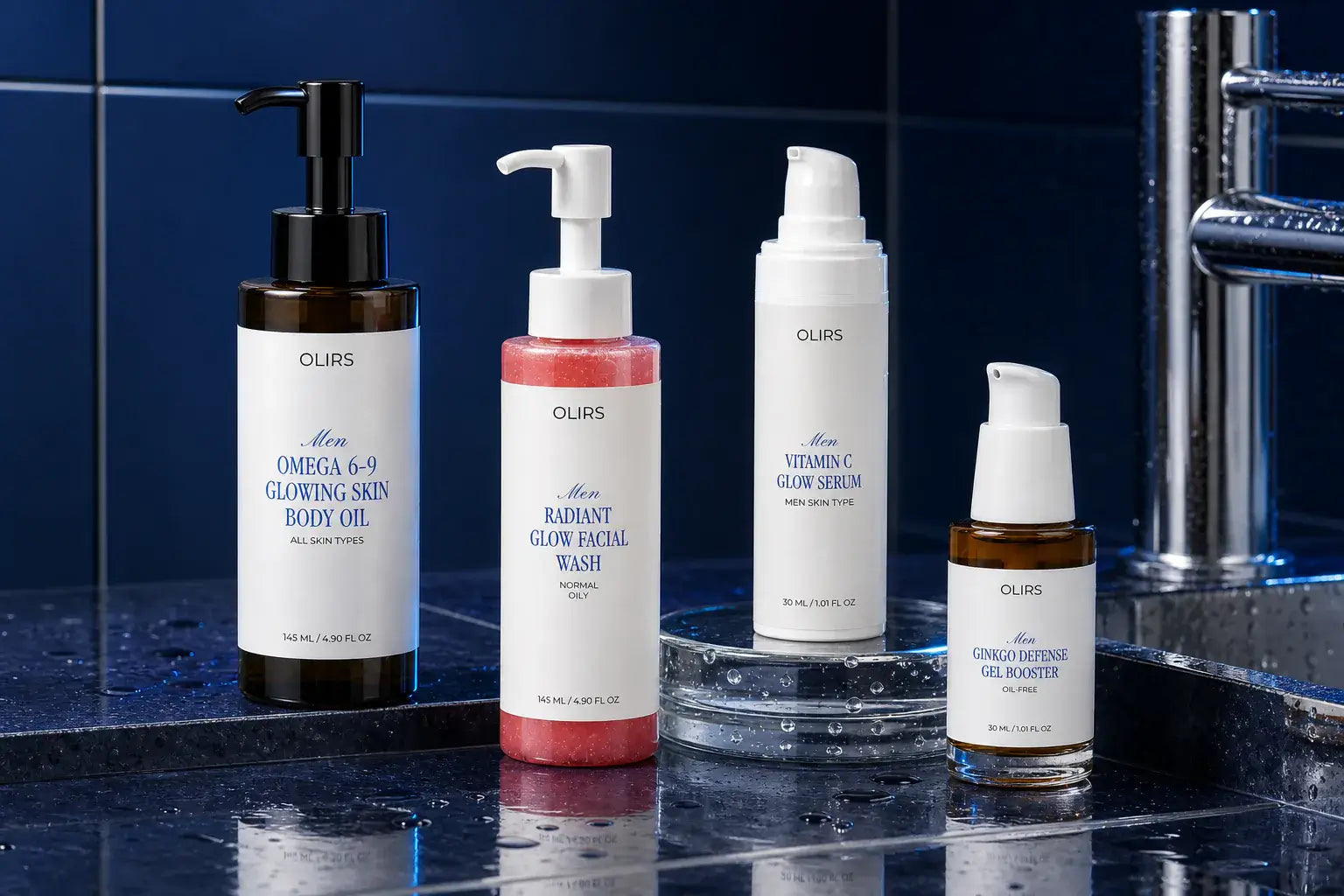
- A gel or foam cleanser — OLIRS also carries a Cleansing Foam and a Radiant Glow Facial Wash if the gel texture above isn't your preference
- A BHA product with salicylic acid named on the label, applied 3-4 nights a week
- An AHA product, applied twice a week, never the same night as the BHA
- A non-comedogenic, oil-free moisturizer for daytime
- COSMOS Natural certification, where it applies, means a third party audited the ingredients and how they were extracted — worth checking on any product before it sits on your face daily for six weeks, especially in 2026 when "clarifying" gets used loosely on labels
What to do next
Blackheads on the nose are usually one symptom of oilier-than-average skin overall, not an isolated nose problem. If shine and clogged pores show up past the T-zone too, the routine above is a starting point, not the finish — a full oily skin routine covers cleanser choice, moisturizer weight, and sunscreen texture for the rest of the face.
FAQ
What causes blackheads on the nose?
Blackheads on the nose form when sebum and dead skin cells sit inside a pore and oxidize on contact with air, turning the plug dark. The nose has a higher density of sebaceous glands than most of the face, which is why blackheads cluster there more than on the cheeks or forehead.
Is salicylic acid better than scrubbing for blackheads?
Yes — salicylic acid is oil-soluble, so it travels into the pore and breaks down the plug from inside, while a scrub only works on the surface and can tear the pore lining. Most men see less visible clogging within 4-6 weeks of consistent salicylic acid use, compared with scrubbing, which often leaves the area looking more inflamed.
How long does it take to clear blackheads on the nose?
Expect 4 to 6 weeks of consistent use before judging results, since skin cell turnover runs on roughly a 28-day cycle. Switching products every week resets that clock and is the most common reason a routine looks like it isn't working.
Do pore strips get rid of blackheads on the nose?
Pore strips pull out the surface plug temporarily but leave the follicle open and irritated without addressing why it filled up in the first place. Blackheads treated this way typically return within days because nothing changed about oil production or dead skin buildup.
Should men with oily noses still use a moisturizer?
Yes — skipping moisturizer on oily skin usually backfires because dehydrated skin overproduces sebum to compensate. A thin, oil-free, non-comedogenic formula applied after treatment steps keeps skin balanced without adding pore-clogging ingredients.
Can you use salicylic acid and an AHA together on the nose?
Not on the same night — stacking a BHA and an AHA on nose skin, which sits thinner over the cartilage than most people assume, commonly causes redness and flaking. Alternate them across the week instead: BHA three to four nights, AHA on the remaining one or two.
What ingredient should men look for to fix blackheads on the nose?
Salicylic acid (BHA) at 0.5-2% is the most studied over-the-counter option for pore congestion as of 2026, followed by glycolic or lactic acid for surface exfoliation. Check the INCI list directly — a product labeled 'clarifying' or 'purifying' without either ingredient named isn't targeting the blackhead mechanism.
Is popping a blackhead on the nose ever okay?
Not with fingers or a metal tool — that pushes bacteria deeper into the follicle and is the leading cause of the dark marks that outlast the blackhead by months. Manual extraction, if needed, belongs with a licensed esthetician using sterile tools, not a bathroom mirror.
One last thing
Pore size on the nose is genuinely structural, tied more to gland density than to any product you apply — the realistic goal isn't invisible pores, it's fewer clogged ones. Read the INCI on whatever you buy for this: a 2026 label that just says "purifying" without naming an acid is marketing copy, not a mechanism. Don't take that on faith — check it yourself.